
yHat.
Turn historicaldata into a clearer view ofwhat comes next
AI-powered time-series forecasting for trend awareness, planning andmodel evaluation. Built to move from data preparation to results inone connected workflow.
Business plans look forward. Most reports look back.
Every operational decision involves a future assumption: demand, capacity, prices, inventory or resource needs. Historical spreadsheets describe what happened, butproducing dependable forecasts requires more than a trend line. yHat brings forecasting preparation, model experimentation and results into a connected workspace.
Reactive planning
Decisions based only on past totals can leave little time torespond to changing conditions.
Disconnected analysis
Preparing data, testing models and reviewing outputs acrossseparate tools slows down the forecasting cycle.
Predictions without context
A projected value is harder to use when model assumptionsand error measures are difficult to inspect.
LOAD
Bring a historical time series into theworkspace and define the forecasting task.
PREPARE
Create and transform features, then selectuseful inputs for the model.
MODEL
Select algorithms, set the forecast horizonand configure tuning options.
REVIEW
Run forecasts, inspect visual outputs andcompare model-error measures.
Forecasting is a workflow, not a black box.
The platform moves through data preparation, algorithm selection, model tuning and results review
Put the historical record to work.
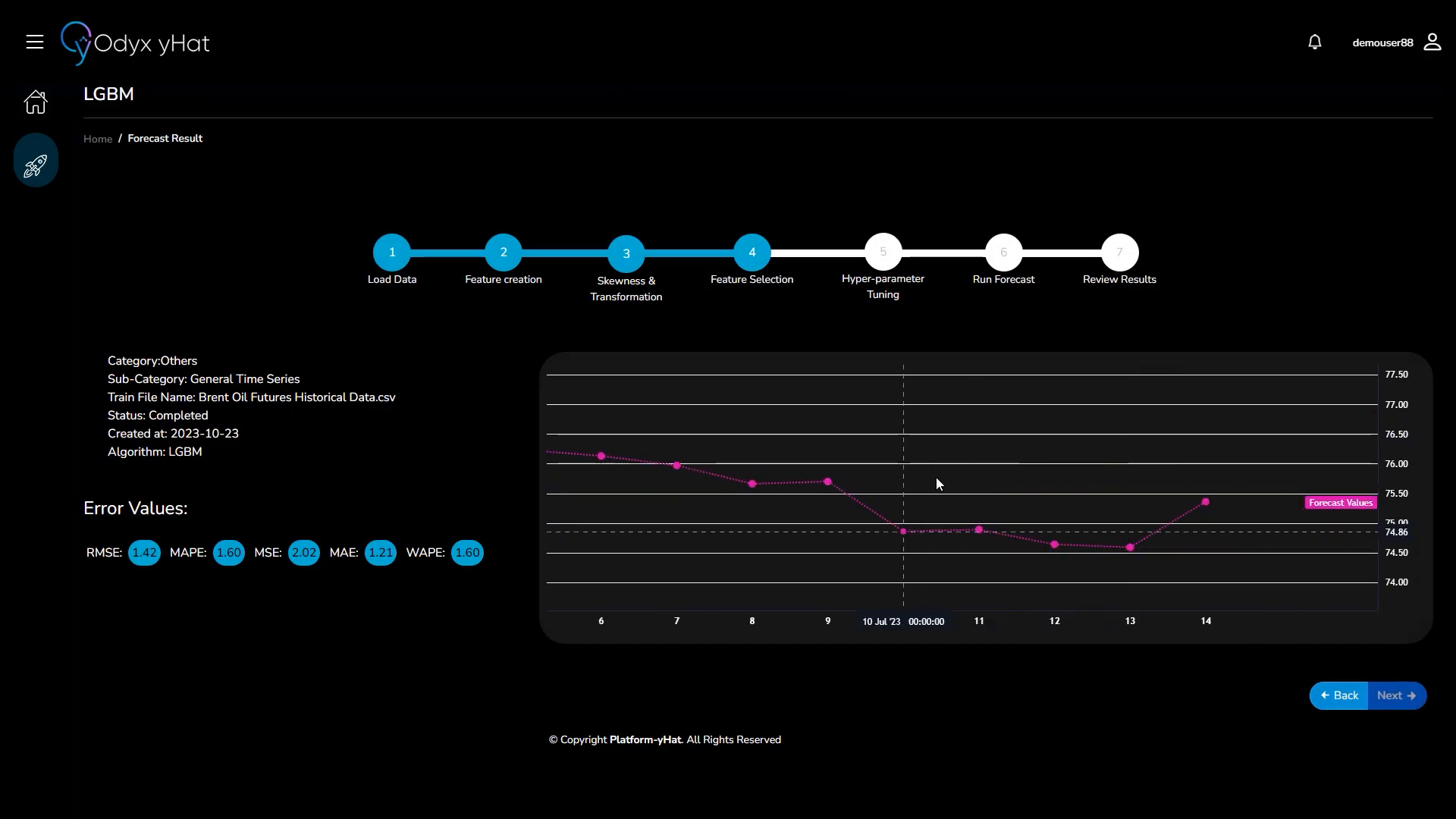
yHat guides users through data loading, feature creation,skewness and transformation, and feature selection. These stepshelp structure the time series before running models - animportant foundation for meaningful forecasts. Load data and build features Skewness and transformation stage Guided feature selection
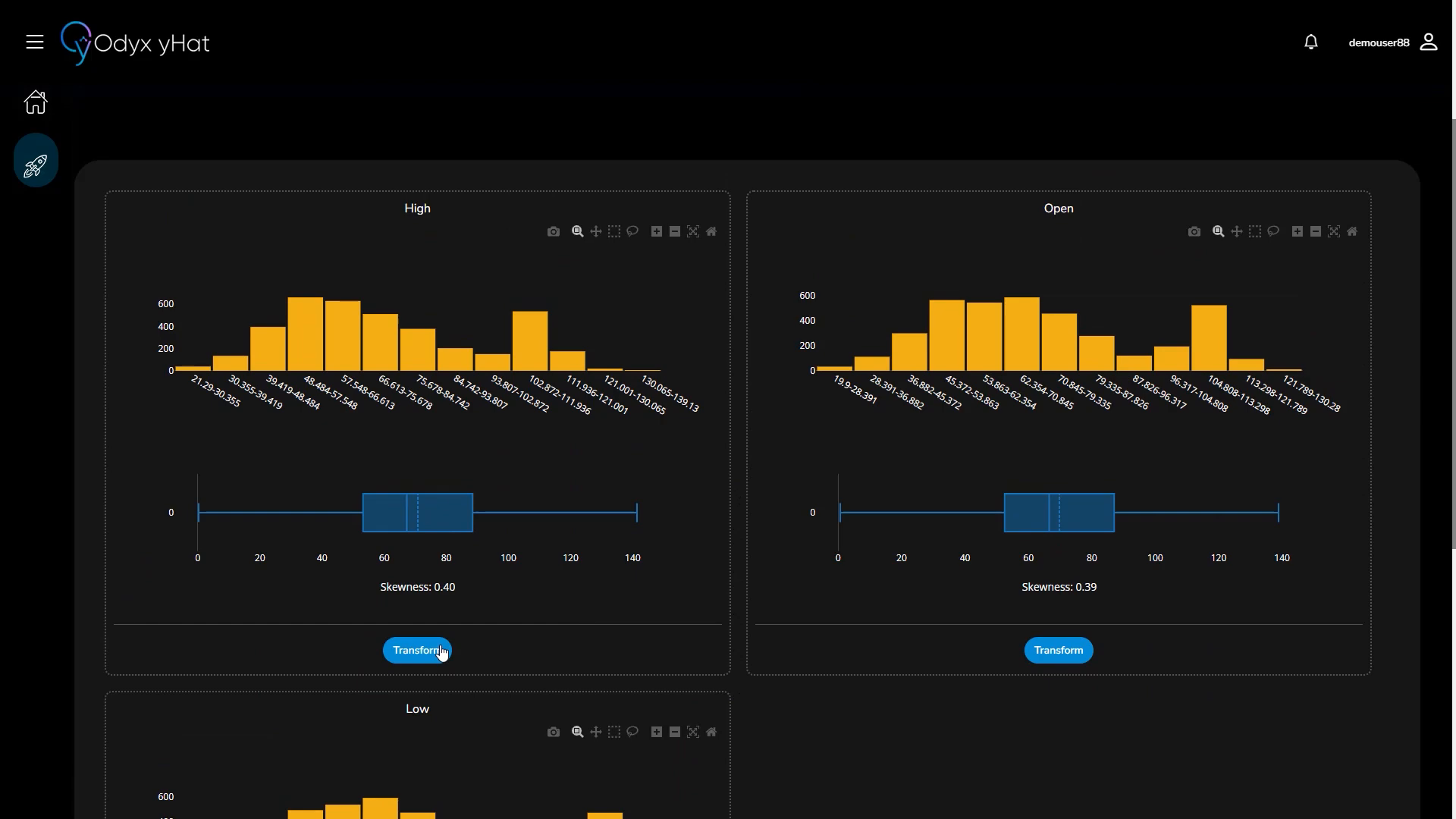
TUNING & CONTROLS FORECAST & EVALUATIONModel choice, forecast length, tuning methods and backtest windows.
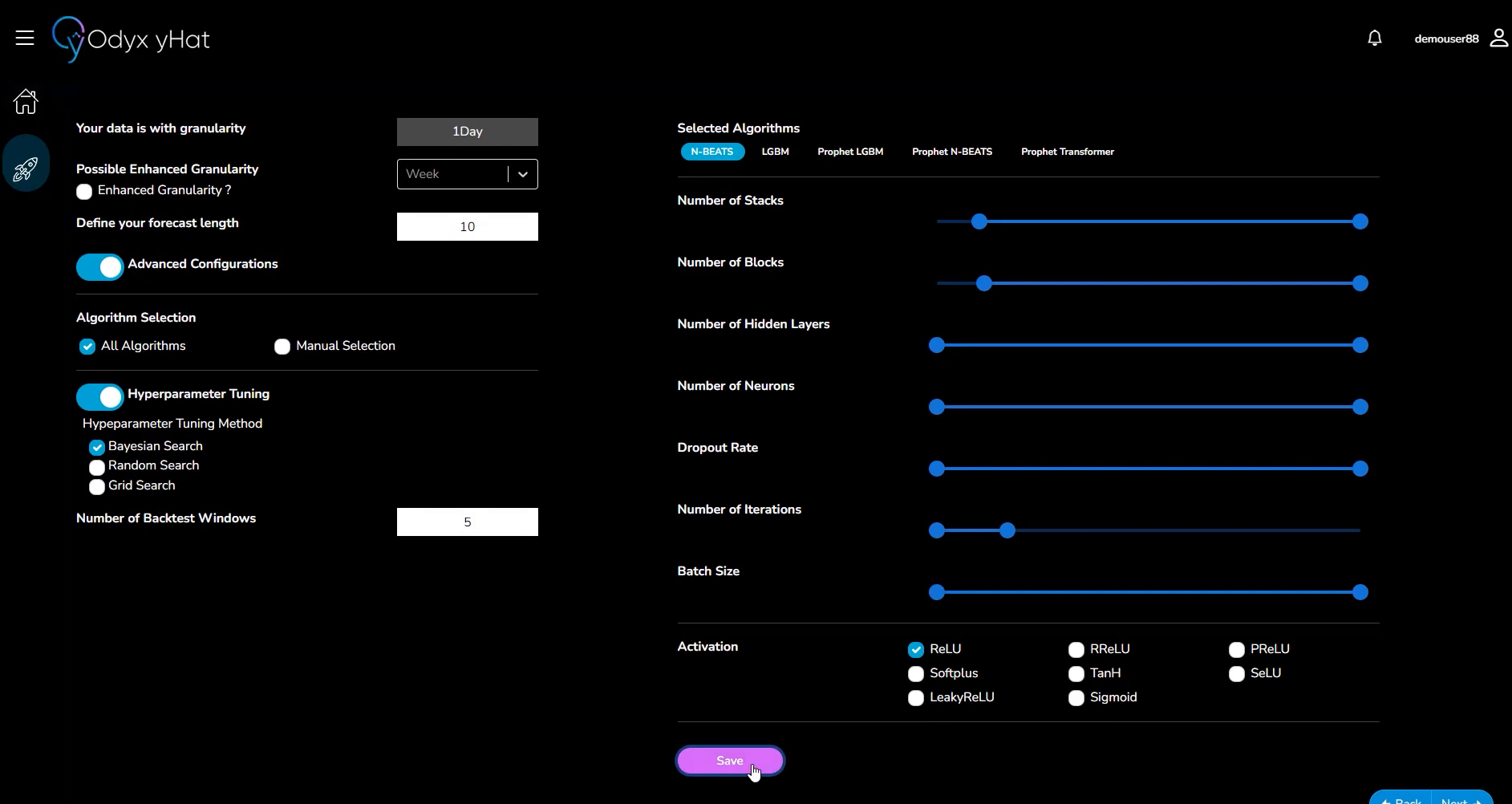
Forecast curve with RMSE, MAPE, MSE, MAE and WAPE.
Good technology takes more than one kind of engineer.
Useful products are built where business understanding, product judgment and deep engineering meet. A polished interface matters—but so do the data foundations, system architecture, integrations, testing and decisions behind it.
OdyxAI brings these disciplines into one coordinated delivery approach, aligning the people defining the problem with the specialists designing, engineering, validating and evolving the solution.
Product Strategy & Experience
Product discovery, user journeys, requirements, prioritization, UX design and interfaces that make complex workflows easier to understand.
AI, Machine Learning & Data
Data engineering, predictive analytics, machine-learning workflows, intelligent automation and practical model evaluation.
Application & Platform Engineering
Frontend and backend development, enterprise APIs, cloud architecture, systems integration and scalable platforms.
Quality, Security & Operations
Testing, access controls, deployment planning, monitoring and iterative improvements beyond first release.
From a difficult problem to a product people can use.
We do not begin with a list of technologies. We begin with the job the product needs to do, the people using it and the constraints that make it difficult. From there, the work becomes a sequence of deliberate decisions: what to build, how to connect it, how to prove it works and what to improve next.
Discover
Understand the business objective, users, workflows, existing systems and measures of success. Identify what must work first—and what can wait.
Design
Translate the problem into user journeys, technical architecture, data flows, integration plans and an actionable roadmap.
Engineer
Build in testable increments. Connect interfaces, intelligence, data and APIs while validating against real use cases.
Evolve
Support deployment, validate system behavior, study user needs and improve the product as requirements change.
The work matters after launch, too.
A product is only valuable when teams can operate it, understand it and build on it. That shapes how we approach architecture, safeguards and long-term engineering decisions.
Integration From the Outset
New products rarely live alone. We plan around the applications, data sources, workflows and APIs they must work with.
Human Judgment Where It Belongs
Intelligent systems need clear controls, review paths and sensible boundaries—especially when outputs inform consequential decisions.
Testability and Visibility
Quality is not a final checkbox. We design for measurable behavior, meaningful tests, monitoring and practical debugging.
Room to Improve
Modular architectures help teams adapt models, features and integrations as products and user needs evolve.
One engineering partner. Different ways to build.
Some teams start with a clear product idea. Others need specialist capacity or a better foundation for what they already run. We shape the engagement around the work—not the other way around.
What does the yHat experience demonstrate?
A forecasting-oriented product experience for turning data signals into forward-looking analytical views.
What is yHat intended to demonstrate?
The project description concerns forecasting: using historical data signals to create forward-looking analytical views.
Are forecasts guaranteed?
No. A forecast expresses an estimate under particular assumptions. It should be accompanied by an evaluation method and an explanation of uncertainty.
How should a forecasting model be evaluated?
Compare its predictions with a suitable baseline on data kept separate from model fitting. Choose error measures that reflect the operational decision the forecast supports.
Can I see a demonstration?
Contact ODYXAI to discuss the relevant workflow. Demonstration availability depends on approved materials and any restrictions on sharing product or customer information.
Can ODYXAI help with a similar engineering challenge?
Share the workflow, systems involved and intended outcome. A scoping discussion can establish relevant engineering requirements, delivery responsibilities and whether a new engagement is a fit.
Bring us the problem. We will help define the build.
Whether you have a new product in mind or a complex platform that needs to move forward, OdyxAI brings product thinking and engineering execution together. Tell us what you are trying to solve. We will start with the right questions.

