
AI Cancer Guardian.
Breast imaging. Risk assessment. Physicianreview. One connected experience.
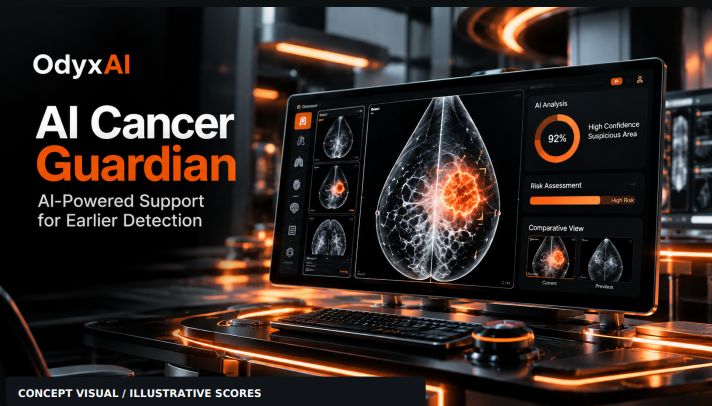
AI Cancer Guardian brings medical-image assessment, personalized cancer-riskquestionnaires and physician-facing reports into one digital workflow. Users canupload mammogram, ultrasound or MRI images for AI-assisted analysis, whilestructured questionnaires add patient-reported risk information. Clinicians receivea clearer foundation for review, and hospital administrators can tailor thequestions to their care setting.
A delayed conversation can begin with disconnectedinformation.
Breast-health decisions often involve several pieces of information: images, patient history, screening questions and a physician’s judgment. When thosepieces sit apart, it becomes harder to see the complete picture and determine what deserves attention next. AI Cancer Guardian brings these inputs into amore organized screening-support experience.
Scattered screening inputs
Medical images and patient-reported answers should be easier toreview together.
Complex imaging findings
AI-generated findings need to be presented clearly so a physiciancan examine their significance.
One-size-fits-all intake
Hospitals and clinics need the flexibility to ask questions that fittheir workflows
From an uploaded scan to a report a physician can review.
UPLOAD
Select a mammogram, ultrasound orMRI image and submit it through theimaging interface.
ASSESS
AI image analysis surfaces potentialareas of concern. Patient questionnairesadd an indicative risk perspective.
REPORT
Organize assessment outputs into adetailed report designed for physicianinterpretation.
Review
The physician evaluates the report inclinical context and decides whetherfurther assessment is needed.
Four connected capabilities. One clearer clinical workflow.
The platform connects imaging, patient information and professional review without treating an algorithm as the final decision-maker.
Give a closer look to what an image may reveal.
Upload mammogram, ultrasound and MRI images through a dedicatedinterface. AI-assisted analysis is designed to identify potential areas ofconcern and indicate their assessed intensity, giving clinicians a startingpoint for further review.
- Mammogram, ultrasound and MRI image uploads
- AI-generated indicators for further examination
- Findings presented for professional interpretation
Every patient brings more than an image.
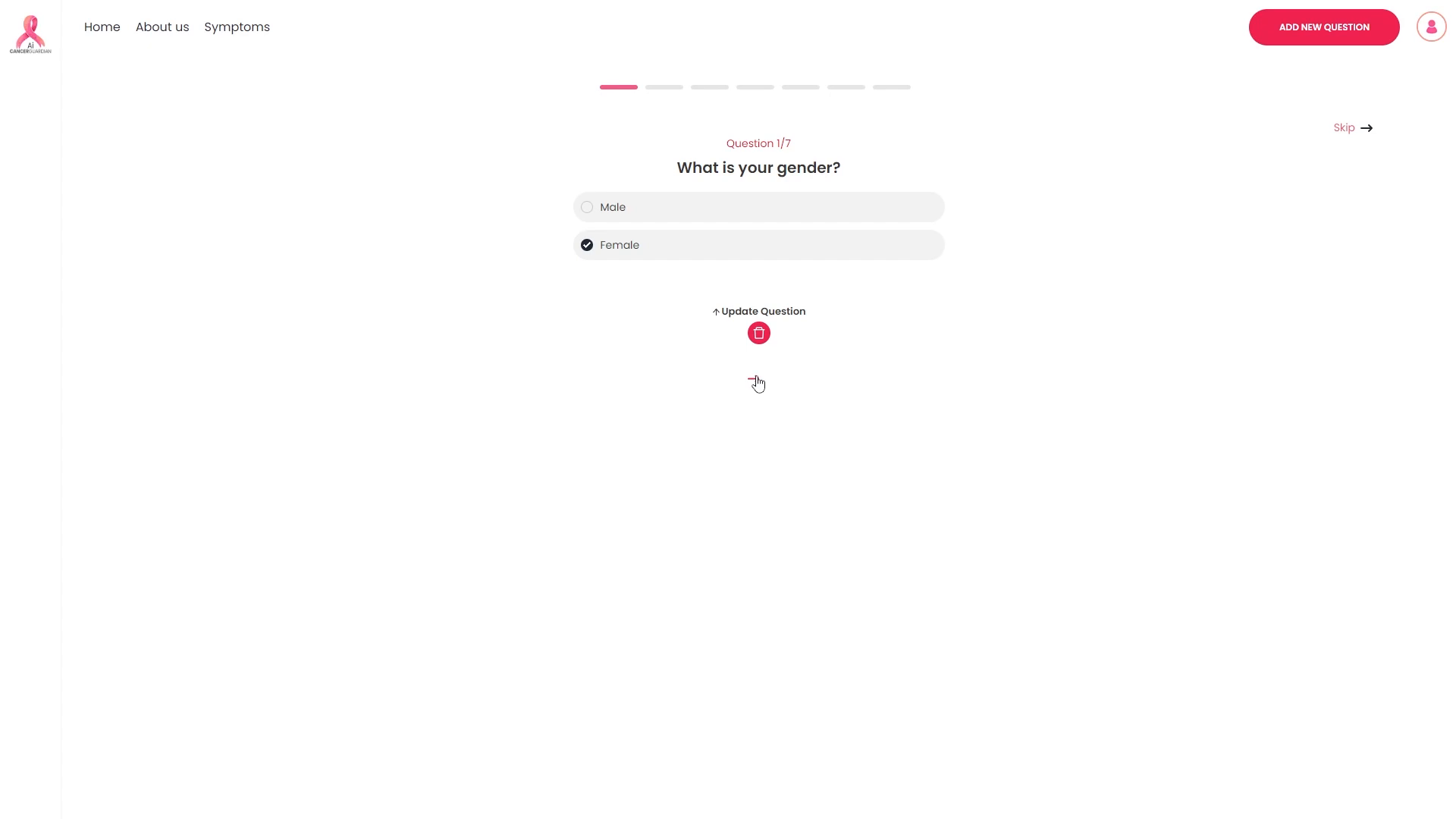
A structured questionnaire collects relevant patient responsesand produces an indicative cancer-risk assessment. It bringscontextual information into the same experience as theimage-analysis workflow, supporting a more informeddiscussion.
- Step-by-step patient questionnaire
- Indicative risk information derived from responses
- Patient information organized for follow-up
Turn model outputs into information aclinician can use.
AI Cancer Guardian is designed to produce detailed assessmentreports that summarize findings from the image-analysisworkflow. These outputs help physicians focus their review anddetermine appropriate next steps alongside other clinicalinformation.
- Structured AI assessment summaries
- Review-oriented presentation of potential findings
- Physician-led interpretation and decisions

Adapt the questionnaire to the care setting.
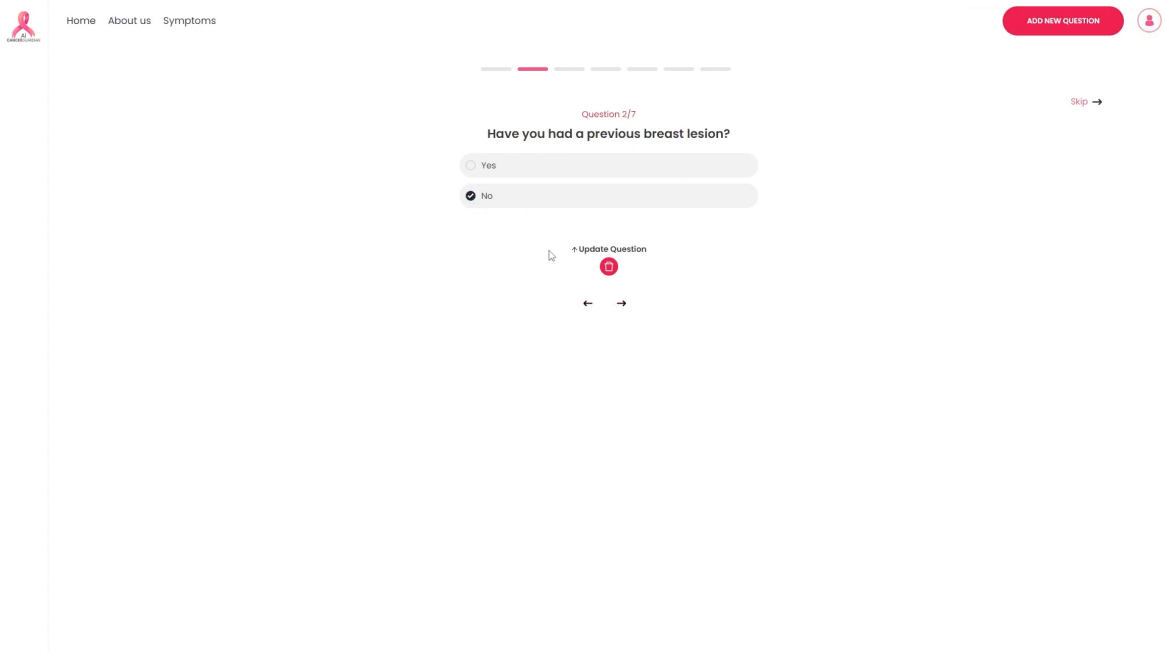
Authorized administrators can add and update questionnaireitems for their hospital or clinic. This makes the patient-intakeexperience configurable instead of forcing every organizationinto the same fixed set of questions.
- Add questionnaire questions
- Update the information being collected
- Tailor the intake journey to local requirements
Designed to assist. Built around the physician
AI Cancer Guardian connects image analysis and questionnaire-based risk information so potential concerns are easier to organize and review. Clinical diagnosis, severity determination and treatment decisions remain the responsibility ofqualified healthcare professionals.
Good technology takes more than one kind of engineer.
Useful products are built where business understanding, product judgment and deep engineering meet. A polished interface matters—but so do the data foundations, system architecture, integrations, testing and decisions behind it.
OdyxAI brings these disciplines into one coordinated delivery approach, aligning the people defining the problem with the specialists designing, engineering, validating and evolving the solution.
Product Strategy & Experience
Product discovery, user journeys, requirements, prioritization, UX design and interfaces that make complex workflows easier to understand.
AI, Machine Learning & Data
Data engineering, predictive analytics, machine-learning workflows, intelligent automation and practical model evaluation.
Application & Platform Engineering
Frontend and backend development, enterprise APIs, cloud architecture, systems integration and scalable platforms.
Quality, Security & Operations
Testing, access controls, deployment planning, monitoring and iterative improvements beyond first release.
From a difficult problem to a product people can use.
We do not begin with a list of technologies. We begin with the job the product needs to do, the people using it and the constraints that make it difficult. From there, the work becomes a sequence of deliberate decisions: what to build, how to connect it, how to prove it works and what to improve next.
Discover
Understand the business objective, users, workflows, existing systems and measures of success. Identify what must work first—and what can wait.
Design
Translate the problem into user journeys, technical architecture, data flows, integration plans and an actionable roadmap.
Engineer
Build in testable increments. Connect interfaces, intelligence, data and APIs while validating against real use cases.
Evolve
Support deployment, validate system behavior, study user needs and improve the product as requirements change.
The work matters after launch, too.
A product is only valuable when teams can operate it, understand it and build on it. That shapes how we approach architecture, safeguards and long-term engineering decisions.
Integration From the Outset
New products rarely live alone. We plan around the applications, data sources, workflows and APIs they must work with.
Human Judgment Where It Belongs
Intelligent systems need clear controls, review paths and sensible boundaries—especially when outputs inform consequential decisions.
Testability and Visibility
Quality is not a final checkbox. We design for measurable behavior, meaningful tests, monitoring and practical debugging.
Room to Improve
Modular architectures help teams adapt models, features and integrations as products and user needs evolve.
One engineering partner. Different ways to build.
Some teams start with a clear product idea. Others need specialist capacity or a better foundation for what they already run. We shape the engagement around the work—not the other way around.
What does the AI Cancer Guardian experience demonstrate?
A healthcare-related AI concept; clinical claims, regulatory status and permitted demonstrations require explicit validation.
Is AI Cancer Guardian a diagnostic tool?
The available project description does not establish diagnostic capability or clinical validation. The concept concerns navigation of cancer-related information and support for informed conversations; it should not be presented as a substitute for clinical judgement.
What is the intended user need?
The concept addresses the difficulty of navigating complex cancer-related information. A useful walkthrough should show how information is presented with context, uncertainty and human oversight.
What needs to be validated before a healthcare demonstration?
The intended use, information sources, privacy boundaries and any clinical claims need explicit review. Demonstration data and screenshots must be approved for public use.
Can I see a demonstration?
Contact ODYXAI to discuss the relevant workflow. Demonstration availability depends on approved materials and any restrictions on sharing product or customer information.
Can ODYXAI help with a similar engineering challenge?
Share the workflow, systems involved and intended outcome. A scoping discussion can establish relevant engineering requirements, delivery responsibilities and whether a new engagement is a fit.
Bring us the problem. We will help define the build.
Whether you have a new product in mind or a complex platform that needs to move forward, OdyxAI brings product thinking and engineering execution together. Tell us what you are trying to solve. We will start with the right questions.

