
Fleet Management.
Every vehicle in view. Everyjourney in context
Fleet Management brings vehicle locations, trip activity,preventive-maintenance alerts, route planning and performance analyticsinto one operational view. Monitor the movement of your fleet, identifyissues earlier and make more informed decisions about every vehicle androute. Built for transport operations managing trucks, buses and delivery…
Moving vehicles. Too many operational blind spots.
Running a fleet means coordinating assets, journeys, drivers, service schedules and operating costs at the same time. When location information, maintenance needsand performance reports are scattered, small delays can become larger operational problems. Fleet Management is designed to bring the information operators needinto one connected workspace.
No single view of the fleet
When vehicle positions and trip details live in separate tools,dispatch and oversight take more effort.
Maintenance that arrives too late
Without timely service reminders and issue visibility, avoidablerepairs can interrupt schedules.
Data without decisions
Fuel use, driver patterns and route performance are harder toimprove when reporting is fragmented.
From vehicle activity to a more efficient operation.
TRACK
Review live locations, vehicle status, trip detailsand the movement of assets across youroperation
ANTICIPATE
Surface maintenance reminders and operationalevents that need attention before they disruptschedules.
OPTIMIZE
Use routing and trip information to supportbetter dispatch decisions and more efficienttravel.
IMPROVE
Read fuel, driver and fleet-performance reportsto identify patterns and refine operations.
One fleet. One connected picture of performance.
Fleet Management is designed around the questions transport teams ask throughout the day: Where is the vehicle? What happened on the trip? What needs maintenance? Andwhere can the operation improve?
Know where the fleet is - and what each journey tells you.
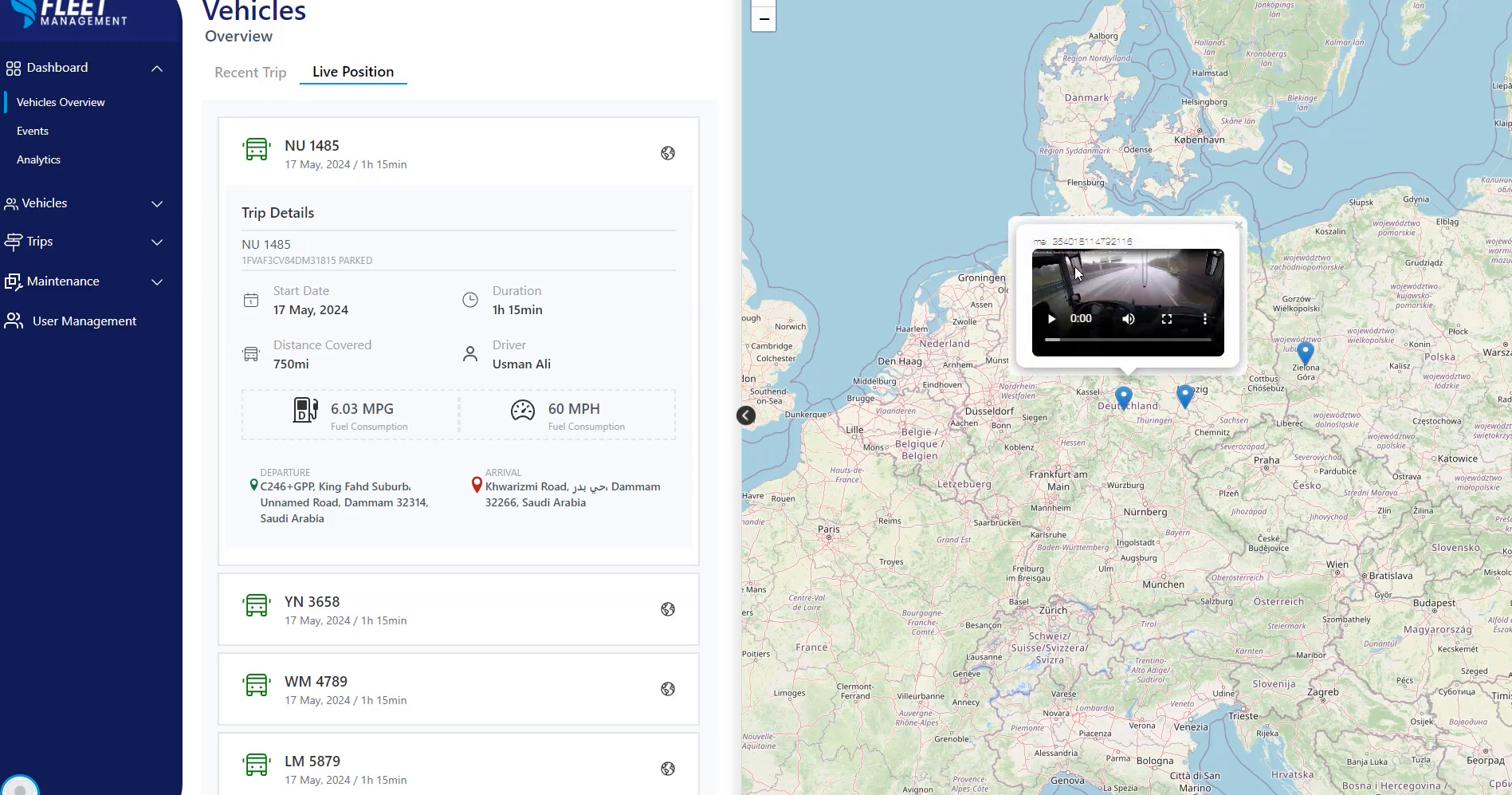
Monitor vehicle locations through map-based views and review trip informationfrom one workspace. The demonstrated interface brings together vehicle lists,map markers, trip dates, duration, distance, driver details and a linked camerapreview. These details help operators move from an asset overview to a specificjourney without switching systems
Make upkeep part of the workflow, not a last-minute reaction.
The platform is designed to surface preventive-maintenance alerts so fleet teams can plan service activityand respond to developing issues before they become expensive disruptions. Maintenance visibility…
More deliberate routes. Better use of every journey.
Route-optimization capabilities are intended to help operators assess travel paths and reduce unnecessarytime and fuel use. Combined with location and trip visibility, routing intelligence supports decisions that…
See beyond the vehicle to how the fleet performs.
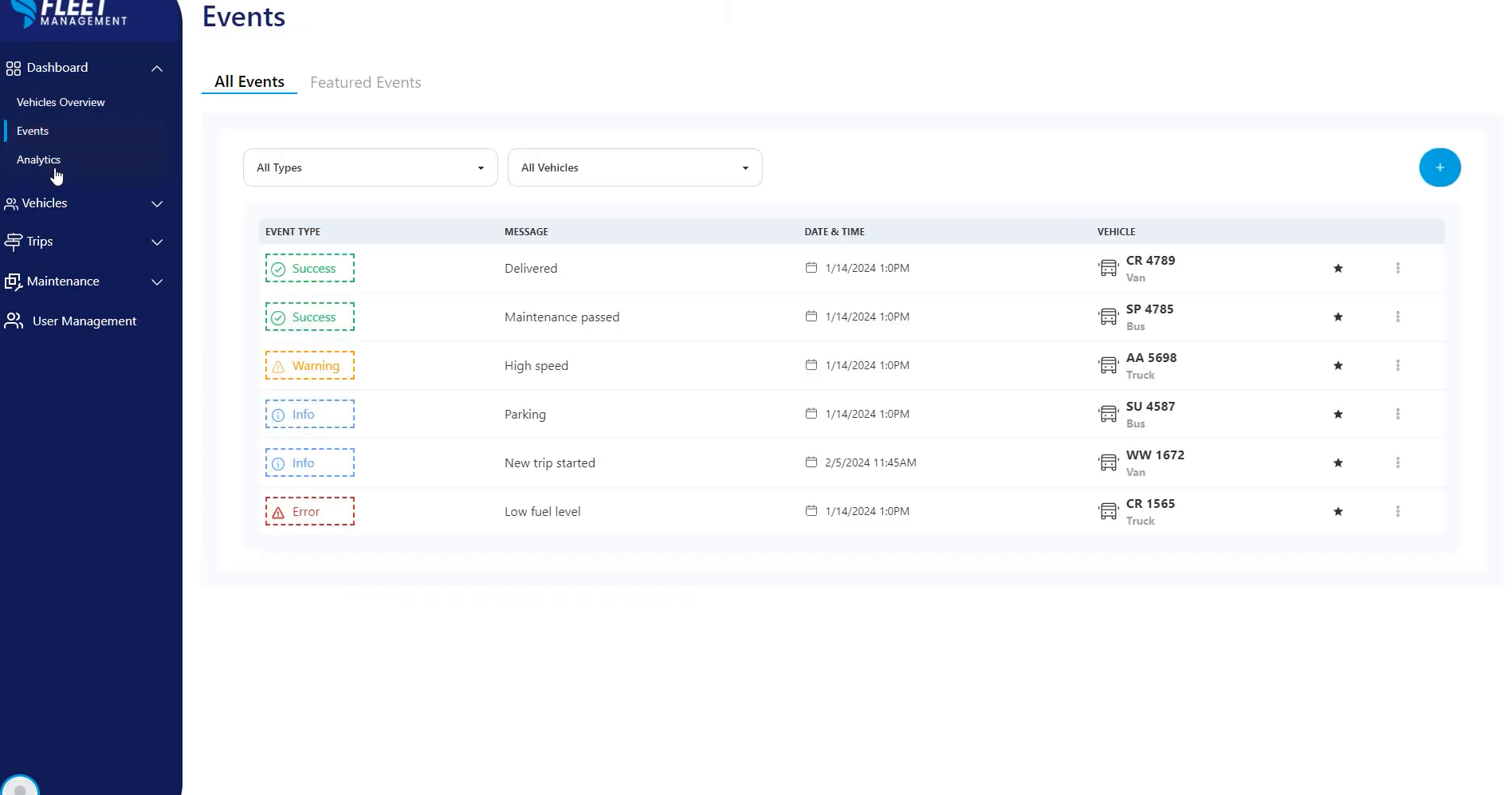
Detailed performance reporting brings together driver behavior, fuel efficiency and overall fleet activity.The demonstration also shows an event-record interface and vehicle-trip details, giving operations teams…
From tracking to action. From operations to intelligence.
The value of Fleet Management is not simply seeing assets on a map. It is connecting where vehiclesare, what they are doing, what they need and how the fleet can perform better
Good technology takes more than one kind of engineer.
Useful products are built where business understanding, product judgment and deep engineering meet. A polished interface matters—but so do the data foundations, system architecture, integrations, testing and decisions behind it.
OdyxAI brings these disciplines into one coordinated delivery approach, aligning the people defining the problem with the specialists designing, engineering, validating and evolving the solution.
Product Strategy & Experience
Product discovery, user journeys, requirements, prioritization, UX design and interfaces that make complex workflows easier to understand.
AI, Machine Learning & Data
Data engineering, predictive analytics, machine-learning workflows, intelligent automation and practical model evaluation.
Application & Platform Engineering
Frontend and backend development, enterprise APIs, cloud architecture, systems integration and scalable platforms.
Quality, Security & Operations
Testing, access controls, deployment planning, monitoring and iterative improvements beyond first release.
From a difficult problem to a product people can use.
We do not begin with a list of technologies. We begin with the job the product needs to do, the people using it and the constraints that make it difficult. From there, the work becomes a sequence of deliberate decisions: what to build, how to connect it, how to prove it works and what to improve next.
Discover
Understand the business objective, users, workflows, existing systems and measures of success. Identify what must work first—and what can wait.
Design
Translate the problem into user journeys, technical architecture, data flows, integration plans and an actionable roadmap.
Engineer
Build in testable increments. Connect interfaces, intelligence, data and APIs while validating against real use cases.
Evolve
Support deployment, validate system behavior, study user needs and improve the product as requirements change.
The work matters after launch, too.
A product is only valuable when teams can operate it, understand it and build on it. That shapes how we approach architecture, safeguards and long-term engineering decisions.
Integration From the Outset
New products rarely live alone. We plan around the applications, data sources, workflows and APIs they must work with.
Human Judgment Where It Belongs
Intelligent systems need clear controls, review paths and sensible boundaries—especially when outputs inform consequential decisions.
Testability and Visibility
Quality is not a final checkbox. We design for measurable behavior, meaningful tests, monitoring and practical debugging.
Room to Improve
Modular architectures help teams adapt models, features and integrations as products and user needs evolve.
One engineering partner. Different ways to build.
Some teams start with a clear product idea. Others need specialist capacity or a better foundation for what they already run. We shape the engagement around the work—not the other way around.
What does the Fleet Management experience demonstrate?
A fleet operations experience for bringing vehicle and operational information into a usable management workflow.
What problem does the fleet experience address?
It concerns bringing vehicle and operational information into a usable management workflow.
Can it connect existing fleet systems?
The brief does not establish specific connectors. Integration feasibility depends on the available interfaces, data formats, permissions and update frequency.
What should a fleet workflow demonstration make clear?
It should show the source of vehicle information, how current it is, what exceptions need attention and who takes the next operational action.
Can I see a demonstration?
Contact ODYXAI to discuss the relevant workflow. Demonstration availability depends on approved materials and any restrictions on sharing product or customer information.
Can ODYXAI help with a similar engineering challenge?
Share the workflow, systems involved and intended outcome. A scoping discussion can establish relevant engineering requirements, delivery responsibilities and whether a new engagement is a fit.
Bring us the problem. We will help define the build.
Whether you have a new product in mind or a complex platform that needs to move forward, OdyxAI brings product thinking and engineering execution together. Tell us what you are trying to solve. We will start with the right questions.

